Blog
Authentic vs. Fake Korean Skincare: What to Check Before You Buy

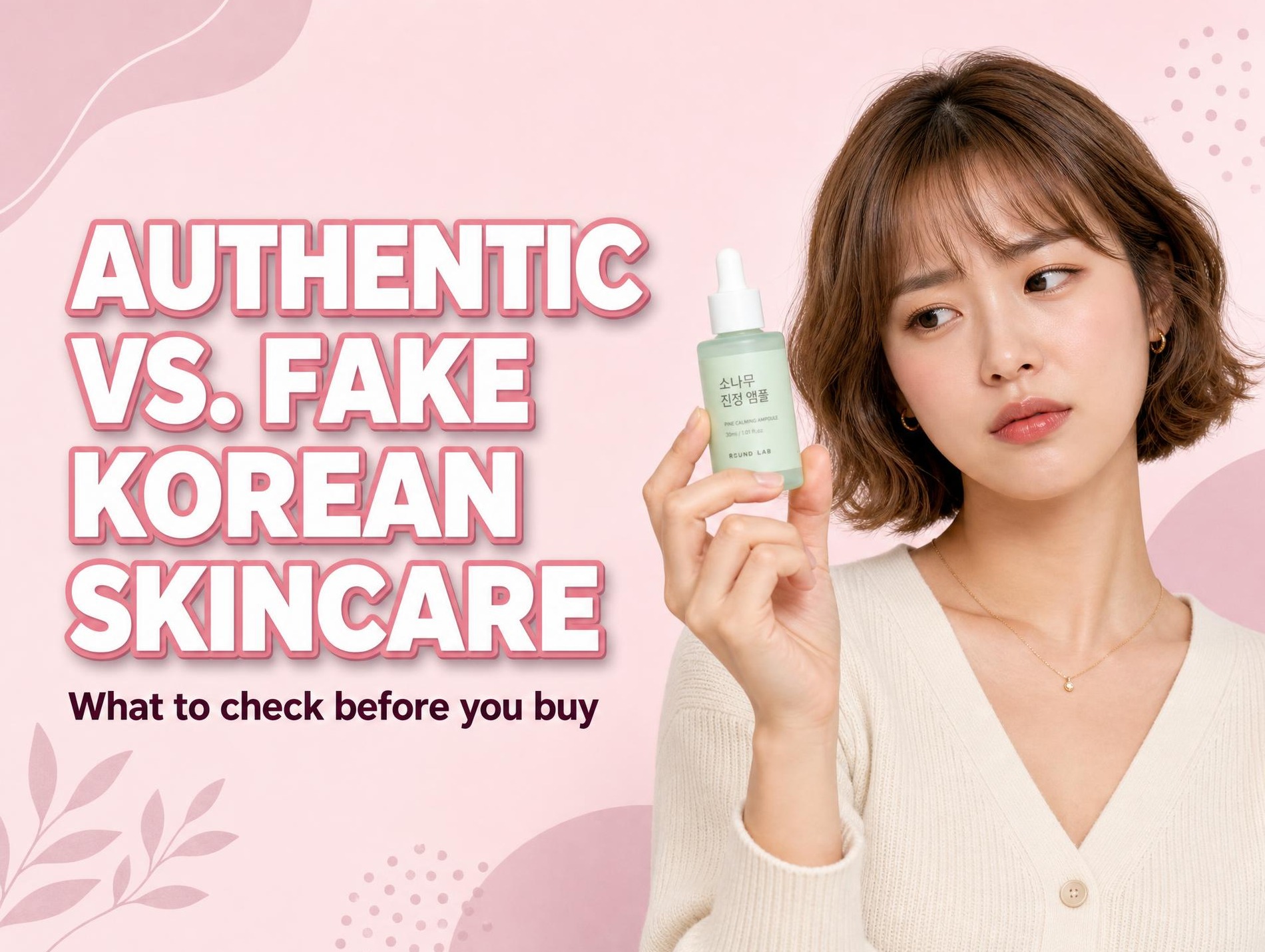
Mia almost gave up on Korean skincare entirely.
The ampoule that looked almost right
It started with a Centella ampoule she found on a marketplace app, priced almost 40% below what she had seen anywhere else. The listing photos looked identical to the real thing—same mint-green box, same Korean text, same little heart-shaped droplet icon in the corner. She clicked buy, told herself she had gotten lucky, and waited for her glow-up serum to arrive.
A week later, the box felt slightly flimsy and the batch-code sticker was crooked and peeling at one corner. The formula was thinner than the one she remembered from a friend’s bottle, with almost no familiar scent. Two days into using it, her skin felt red, tight, and irritated.
Mia’s experience is not unusual. As authentic Korean skincare has grown more popular worldwide, counterfeit versions of best-selling products have followed. Once you know what real K-beauty looks, feels, and smells like, spotting warning signs becomes much easier.
Why Fake K-Beauty Is Everywhere Right Now

The more viral a Korean skincare product becomes, the more attractive it is to counterfeiters. Brands such as COSRX, Anua, and SKIN1004 have bestsellers that shoppers actively search for at a discount, making those products especially tempting targets.
Counterfeits do not appear only on obviously suspicious websites. They can surface through third-party marketplace sellers, unofficial resellers, and physical stores that are not authorized distributors. The packaging may look convincing at first glance, which is exactly why learning how to spot fake Korean skincare matters.
How to Check: Step-by-Step Before You Buy

After her ampoule disappointment, Mia built a simple routine for checking every product before it reached her skincare shelf. This is the checklist we recommend:
- Buy from authorized retailers: Choose official brand sites, verified flagship stores, or retailers that can confirm where their inventory comes from.
- Compare the official price: A dramatic discount is a reason to investigate, not proof that you found a bargain.
- Check the batch code and QR code: Look for clean printing or embossing and verify codes through the brand’s official website or app when available.
- Inspect the packaging: Compare the color, print sharpness, font, seals, and box quality with official product photos.
- Trust texture, scent, and skin response: An unfamiliar consistency, missing or unusual scent, or sudden irritation deserves attention.
- Match the INCI list: Compare the full ingredient list with the one published by the brand.
Price Red Flags That Deserve a Second Look

Authorized distributors may run sales, bundles, or seasonal promotions, but a product priced 30–50% below the normal market range should prompt extra checking. Compare several authorized sellers, review who fulfills the order, and remember that a low price is not worth the risk of an unknown formula.
What Authentic Packaging Looks Like

- Print quality: Genuine packaging normally has crisp text, clean edges, accurate colors, and consistent spacing.
- Batch information: Codes should be aligned, legible, and consistent with the brand’s usual format.
- QR verification: Scan only through the brand’s official site or app; a QR code alone is not proof of authenticity.
- Materials and seals: Flimsy cardboard, blurry labels, crooked stickers, or broken seals are reasons to stop and verify.
Trust the Formula—and Your Skin

Packaging can be copied more easily than formulation quality. If a familiar serum suddenly feels watery, smells noticeably different, separates strangely, or causes an unexpected reaction, stop using it. Keep the packaging and order details, photograph the product, and contact the retailer or brand for help verifying it.
Authentic vs. Fake: Side-by-Side Comparison

| What to Check | Authentic Korean Skincare | Fake / Counterfeit |
|---|---|---|
| Seller | Official brand site or authorized retailer | Unverified third-party seller |
| Price | Consistent with official retail pricing | Suspiciously discounted below the normal range |
| Batch code | Clean, aligned, and verifiable | Crooked, smudged, missing, or unrecognized |
| Packaging | Crisp print, accurate colors, sturdy box | Dull colors, flimsy materials, or slightly-off fonts |
| Texture and scent | Consistent with the known formula | Watery, separated, off-scent, or unexpectedly different |
| Ingredient list | Matches the brand’s official INCI list | Missing, shortened, or inconsistent ingredients |
| Skin response | Performs as expected for the formula | Unexpected irritation, breakouts, or discomfort |
Where This Leaves You
Mia did not give up on Korean skincare—she became more careful about where she buys it. She switched to authorized retailers, began checking batch codes as a habit, and reordered the same Centella ampoule from a trusted source. This time, the texture and scent felt familiar, and her skin finally responded the way she expected.
That is the point of this guide: genuine Korean skincare online works because its formulas are made to a specific standard. A counterfeit can copy the box, but it cannot reliably copy the formulation science behind it.
At MYFIOR, products are sourced through authorized channels, so what arrives at your door is what the brand intended—without shortcuts or guessing games.
5 FAQs—Quick Answers Before You Buy

1. How can I tell if a product is fake before opening the box?
Check the seller’s authorization, compare the price with official retailers, and inspect the packaging, seal, batch code, and QR code. If anything feels inconsistent, contact the seller or brand before opening it.
2. Can fake Korean skincare harm my skin?
It can. Counterfeit formulas may use unknown ingredients or inadequate preservation and may not follow the same manufacturing standards, increasing the risk of irritation or an allergic reaction.
3. Is buying from a marketplace always risky?
Not always. Choose the brand’s verified official store or an authorized seller, check who fulfills the order, and read recent reviews for repeated authenticity concerns.
4. Can I verify authenticity with the QR code?
A QR code can help when the brand provides an official verification tool. Scan through the brand’s official website or app, because counterfeit packaging can also include copied or misleading codes.
5. What should I do if I suspect a fake?
Stop using the product, keep the packaging and receipt, photograph the batch details, and contact the retailer and the brand. If you have a strong skin reaction, seek advice from a qualified healthcare professional.
Conclusion—Buy the Formula, Not Just the Box
Authentic Korean skincare should feel consistent from the package to the formula. Buy from a source you trust, compare the details before opening, and listen to your skin when something feels wrong.
Ready to shop Korean skincare with confidence? Browse MYFIOR’s authenticity-verified K-beauty favorites.